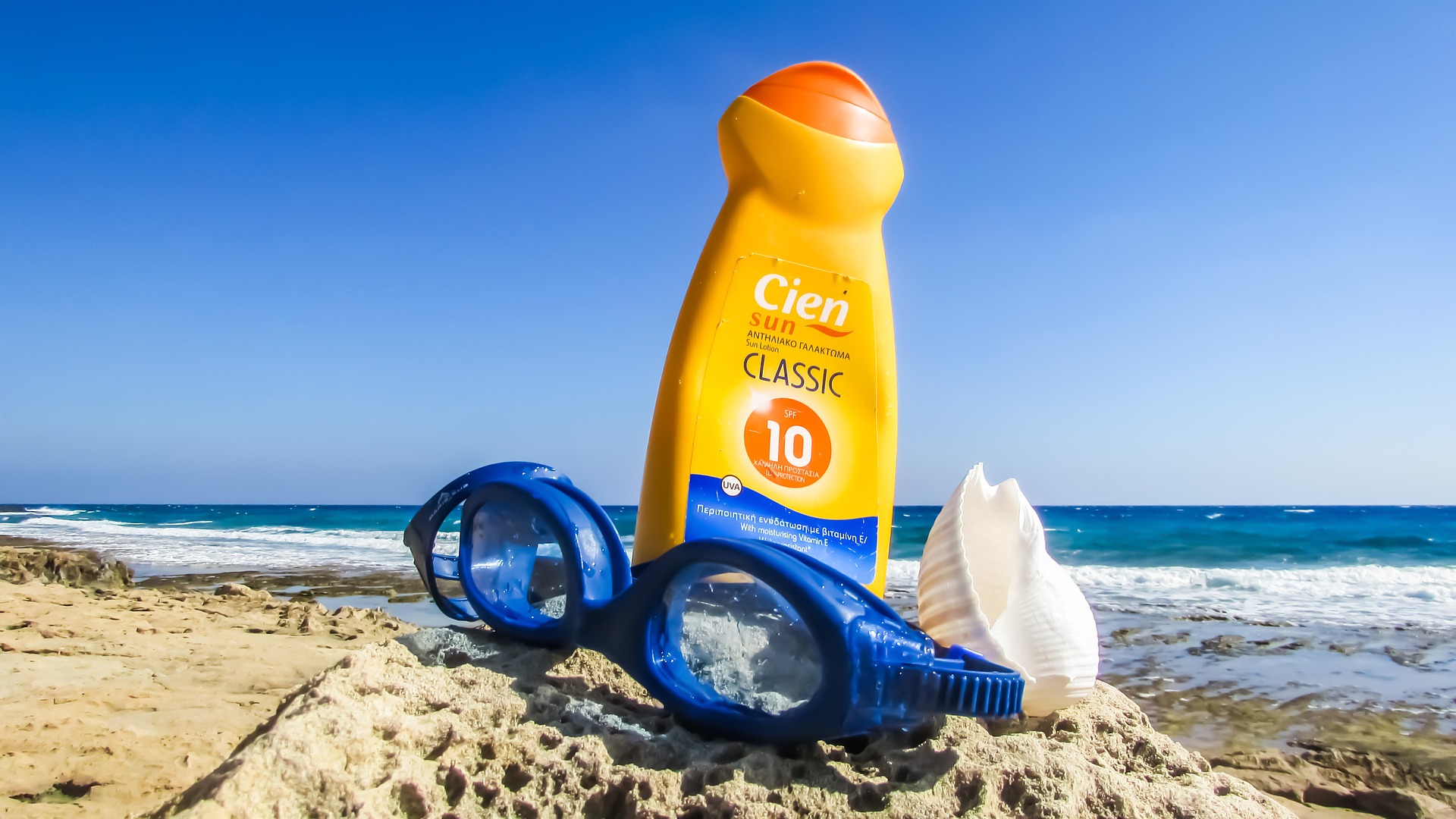
On June 25, 2019, lawmakers in the US Virgin Islands (USVI) made history by being the first place in America to ban three UV-filtering chemicals commonly used in many commercial sunscreens: oxybenzone, octinoxate, and octocrylene. These three ingredients damage coral DNA and its early development as well as lead to reduced fish fertility, poor algae growth, and shellfish deformities. Oxybenzone (benzophenone-3) can be found in over 3,500 sun care products alone.
Approximately 14,000 tons of sunscreen end up in the oceans annually. It doesn’t only come from those swimming in the sea—sunscreen rinsed off when bathing will eventually find its way to the ocean. The new law means brands containing oxybenzone, octocrylene, and octinoxate may no longer be possessed, imported, distributed, or sold on the islands.
The Majority of Caribbean Coral Reefs Have Been Lost
According to the Island Green Living Association of St. John, at least 80 percent of the Caribbean’s coral reefs have been lost. From 2014 to 2017, an extensive case of coral bleaching, described as the “longest, most widespread, and almost certainly most destructive” by the Bulletin of the American Meteorological Society, occurred in the region.
Coral bleaching results when stressed corals expel zooxanthellae, a type of algae that lives in their tissue. Zooxanthellae create food for the coral by absorbing light and photosynthesizing. When they are absent, it starves the coral of food, oxygen, and color.
Rising ocean temperatures and other stressors can trigger bleaching. If prolonged, the coral becomes vulnerable to collapse and will generally starve to death. Corals survive in a very slim temperature band and are under increasing threat as ocean temperatures rise due to climate change.
The Importance of Reefs
Globally, about 500 million people rely on coral reefs for their survival. In the US, reef tourism, fisheries, and coastal protection generate about $3.4 billion annually, including $187 million in the USVI.
Holidaymakers experience the Caribbean coral reefs as underwater playgrounds that help them forget the stresses of life back home. But the reefs also provide a valuable physical buffer for the islands from extreme weather conditions like storms and hurricanes. They also help to prevent coastal erosion.
Coral reefs support a wealth of fish and other sea life, and they act as the ocean’s filtration system by absorbing particles and controlling the level of carbon dioxide. The processing of carbon dioxide forms the limestone shell of coral, and without it, carbon dioxide levels would rise and affect all living things.
It’s not surprising then that Virgin Islands senator Janelle K. Sarauw sponsored the legislation banning the three ingredients, stressing the importance of protecting the VI’s reefs and beaches: “A cleaner Virgin Islands, both in the health of its people and spaces, only serves to benefit us all.”
What Sunscreens Are Reef-Safe?
Sunscreens can broadly be categorized as either mineral or chemical. Chemical screens contain synthetic compounds that absorb UV light. In contrast, mineral screens form a physical barrier over the skin that prevents UV light from penetrating it.
Reef-safe sunscreens are usually mineral-based and contain ingredients like zinc oxide or titanium dioxide. But even these are not safe if they contain nanoparticles less than 100 nanometers in size. Particles this small get absorbed by marine life, so look for brands labeled with “non-nano” ingredients.
Interestingly, zinc oxide and titanium dioxide are also the only two sunscreen ingredients judged safe by the FDA. Of the remaining 14 on the market, two (aminobenzoic acid and trolamine salicylate) are deemed unsafe, and the remaining 12, including oxybenzone, octocrylene, octinoxate, require further research.
How Else Can Beach-Goers Protect Themselves from the Sun?
Applying “safe” sunscreen is not the only option available to those wishing to be both sun-safe and reef-safe. Some experts even advocate it as a “last resort” after these protective measures:
- Covering up – Wearing wetsuits or clothes, swimwear, and hats that offer physical protection or contain UV protection in their fabrics
- Staying undercover – Sticking to the shade
- Avoiding the harshest sun – Checking the UV index before going outside and planning outdoor activities accordingly (usually avoiding the hours between 10 a.m. and 2 p.m.)
If we each do our bit to save the reefs, we will hopefully manage to preserve them for future generations. Hawaii and Key West, Florida, have since approved bans on the sale of sunscreens containing oxybenzone and octinoxate, set to go into effect in 2021.